Where this goes
Roadmap
Closed alpha now, beta waitlist open, and the order the rest arrives in.
Each phase depends on the one before it being trustworthy, which is why the order matters more than the dates. The dates are indicative.
- Q3 2026 Closed alpha A small invited group, using it on their own clothes.
- Q4 2026 Open beta The waitlist is open now. Same build, far more people.
- Q4 2026 - Q1 2027 The basics, done properly Fit and combination, proved on the narrowest set of variables first.
- Q1 2027 Menswear first Fewer silhouettes in the conventional range, so fewer variables to get right.
- Q2 2027 Broader wardrobes More garment types, more drape, more ways for a render to be wrong.
- Q2 - Q3 2027 A body that changes Fit across a cycle, and through everything else that changes a body.
- Q3 2027 What you own versus what you buy Wear counts, forgotten items, and getting things back out of the house.
- Q3 - Q4 2027 Layering and climate Whole outfits across a day, not one garment at a time.
Closed alpha
A small invited group, using it on their own clothes.
Selected users, on purpose. An alpha is for finding what breaks on real wardrobes and real bodies, and that goes better with a few people you can talk to than with a few thousand you cannot.
- Your wardrobe, photographed and visible in one place
- Weather and calendar on the same screen as the wardrobe
- Events carrying their own dress code
- Everything stored on the device
Open beta
The waitlist is open now. Same build, far more people.
Beta is where the wardrobe stops living only on one phone. That means accounts, and it means being clear about what happens to your photographs before it opens rather than after.
- Waitlist open to anyone
- Accounts, so a wardrobe survives a lost phone
- Your own body rather than a placeholder
- Written commitments on data, published before the first upload
The basics, done properly
Fit and combination, proved on the narrowest set of variables first.
The first thing that has to be right is whether a garment looks the way it will actually look on you. Everything else is built on that being true, so it gets proved on the simplest case before the harder ones are added.
- A garment rendered on your measurements, reliably
- Two items checked against each other
- Add an item from a photograph you took
- Filter and find, at wardrobe scale rather than demo scale
Menswear first
Fewer silhouettes in the conventional range, so fewer variables to get right.
A sequencing decision about difficulty, not about who this is for. Where convention allows a narrower set of shapes, there are fewer ways for a render to be subtly wrong, which makes it the right place to find out whether the core is trustworthy. The findings carry straight over.
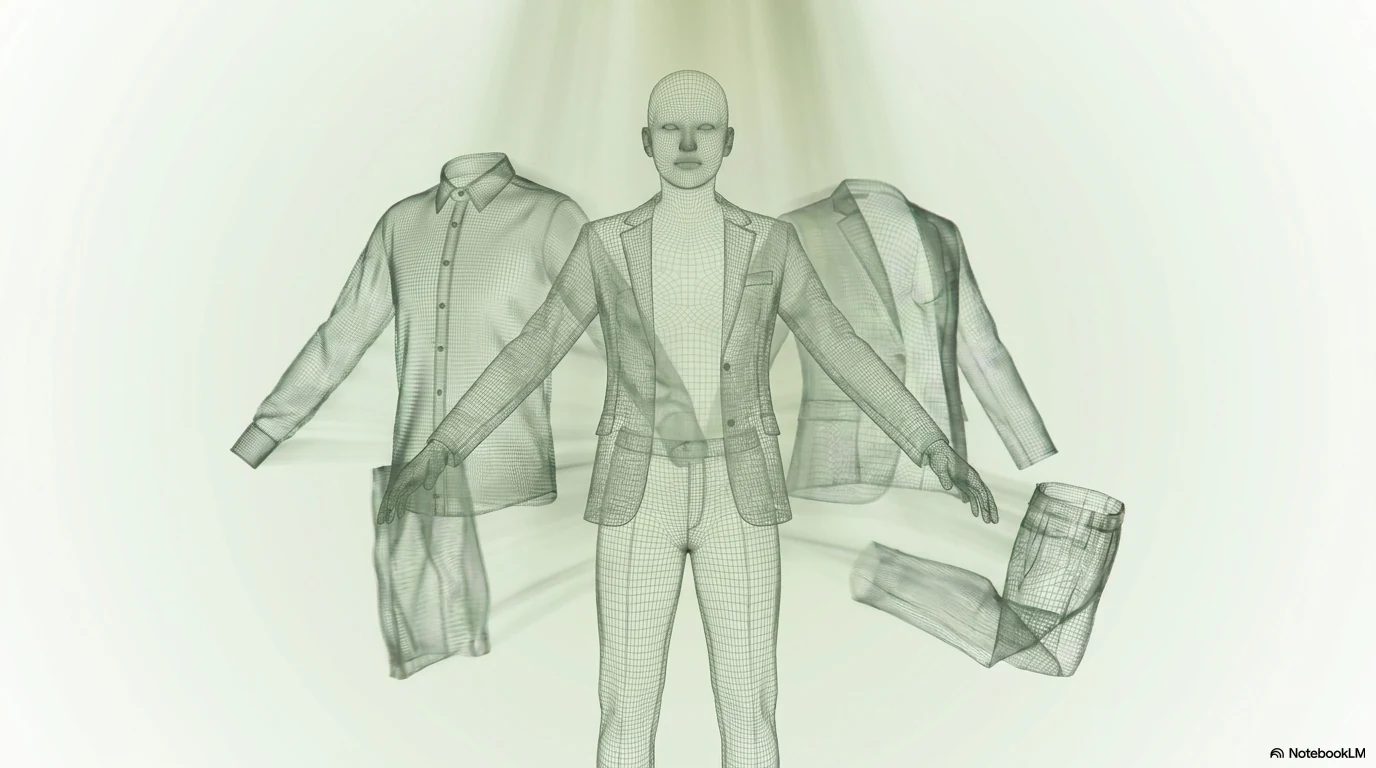
- Shirts, trousers, jackets, knitwear
- Shade and contrast, compared side by side instead of from memory
- Fit read from proportions rather than a size label
Broader wardrobes
More garment types, more drape, more ways for a render to be wrong.
Dresses, skirts, and anything that drapes rather than hangs are harder to render honestly, and getting them wrong is worse than not offering them. They come once the simple cases are dependable.
- Dresses, skirts and draped garments
- Necklines, hems and where a garment actually falls on you
- The garment facts worth keeping: sheer, creases, rides up
A body that changes
Fit across a cycle, and through everything else that changes a body.
A wardrobe app that assumes one fixed body is wrong about almost everyone. Fit changes across a cycle, and equally through pregnancy and after it, weight change, illness, injury or a decade. The same mechanism handles all of them.
- More than one body state, switched rather than rebuilt
- Saved sets for the days you do not want to decide anything
- Comfort treated as a property of the garment, not an afterthought
What you own versus what you buy
Wear counts, forgotten items, and getting things back out of the house.
The largest environmental lever most people have is wearing what they already bought. That needs a number attached to each item rather than a feeling, and a low enough barrier to pass things on that the bag by the door actually leaves.
- Wear count per item
- Nudges on things not worn in a long time
- Listing that reuses photography you already have
Layering and climate
Whole outfits across a day, not one garment at a time.
The hardest rendering problem, and the one that makes travel and packing work. A layered outfit is not three garments shown together; it is garments that sit over and under each other correctly.
- Outfits built from several pieces at once
- A day planned as indoor and outdoor, not one temperature
- Packing a set of days rather than a set of outfits
Why this order
The simple thing has to be right before the hard thing is worth attempting. If a garment does not render honestly on your body, nothing built on top of it is worth having. So the first real milestone is not a feature, it is a garment looking the way it will actually look.
Menswear first is about variables, not about audience. Where convention allows a narrower set of shapes, there are fewer ways for a render to be subtly wrong, and it is easier to tell whether it is working. Draped garments, hems that fall differently on different bodies, and layered outfits are harder problems, and shipping them badly is worse than shipping them later. The work carries straight over; it is a sequencing decision.
A body that changes is not an edge case. It applies across a cycle, through pregnancy and after it, through weight change, illness, injury, and simply time. Almost nobody has one fixed body, so a product that assumes one is wrong about almost everyone. It arrives once the wardrobe side is solid, because it needs the fit underneath it to already be dependable.
Layering is last because it is hardest. A layered outfit is not several garments displayed together, it is garments sitting over and under each other correctly. It is also what makes packing and travel genuinely work, so it is worth waiting for rather than faking.
What this page does not say
The specifics of how the avatar is built, how try-on is rendered, and what makes it hold up better than the alternatives are deliberately not here. The order and the timing are useful to you. The method is not, and it is the part worth keeping.
Getting in
Alpha is closed and invited. The beta waitlist is open to anyone, and joining it commits you to nothing.
More on what alpha and beta involve, including what happens to your data: alpha, beta and how to get in.