Your body. Your closet. Your rules.
You wear a fifth of what you own.
The rest is behind a coat. DROBE puts everything you own on a replica of your own body, so you can see all of it and decide before the morning starts.
You have probably done this
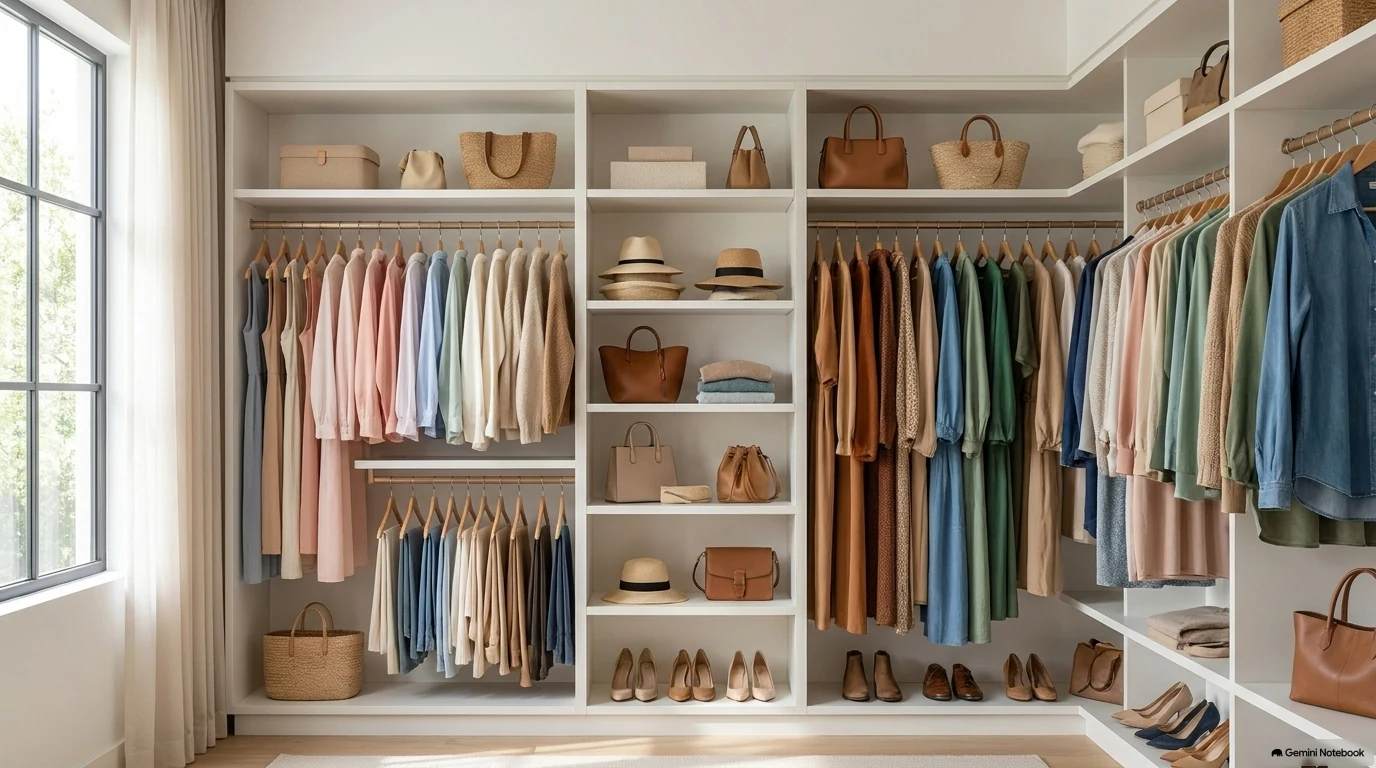
Most of a wardrobe is invisible from the front.
A wardrobe is a stack of fabric facing sideways. You reach past thirty things to the same five, and the rest may as well not be there. None of this is a fashion problem, and most people have never thought of it as solvable.
The thing behind the coat
You own something you like. It has been behind the winter coat since March, so it has not existed since March.
Two greys, one wrong
One of them works with the blue trousers. You will find out which after both are on.
Dressed for yesterday
It is four degrees colder than when you last checked, and you checked at the door.
Bought it twice
The second black jumper, because the first one was behind the coat. See above.
Three sizes, keep one
Ordering several and returning most is now normal behaviour online, and it is nobody's idea of a good time.
The bag by the door
Perfectly good clothes someone else would want, waiting on an hour of photographing you are never going to spend.
What it actually does
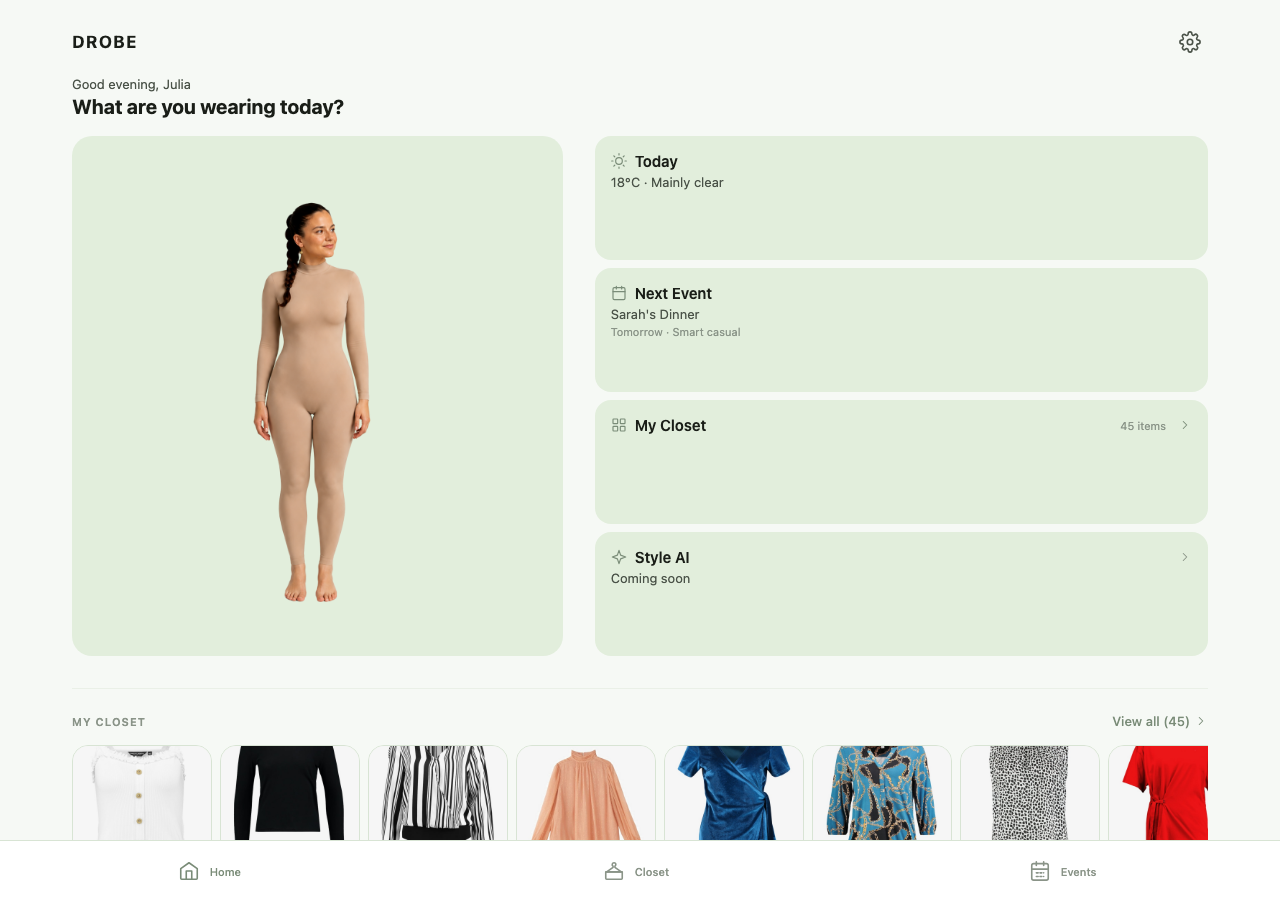
Your clothes, on your own body, before you get dressed.
Photograph each item once. It lives in a grid from then on, not on a rail.
Your body is a replica built from your own measurements, so a garment falls where it will actually fall - not where it falls on a model.
Weather and your calendar sit on the same screen, because both are settled before the wardrobe is opened.
The numbers
It is not just you.
About a fifth
The share of their wardrobe most people wear, most of the time. The rest is owned, paid for and unused.
Roughly a quarter
Of online clothing orders go back. Apparel returns run far higher than any other category.
Half to two thirds
Of those returns are fit and sizing. Not taste, not quality. The garment did not fit the body.
Most online shoppers
Now order more than one size intending to send the rest back. It was around four in ten in 2018.
Coresight and NRF on returns. McKinsey and Prime AI on fit as the cause. Repeated wardrobe studies on the fifth that gets worn.
Use cases
Ordinary days, and the ones with a trap in them.
Not styling. The practical parts: what is clean, what suits the weather, what the invitation actually meant, and what will not betray you under stage lights or in a photograph.
Every day
Occasions with rules
Dress codes are a language nobody teaches you, and the penalty for getting one wrong is entirely social.
Four days at a conference, one bagMulti-day, photographed constantly, standing for nine hours, and one suitcase.
Speaking on a stageStage clothing has requirements that have nothing to do with looking good - microphones, cameras and lighting all have opinions.
Travel
Buying, swapping and letting go
The photograph is a different body, sometimes not a body at all, and the size label means nothing. So people order three and send two back.
Buying secondhand and vintageSecondhand is one of a kind, photographed badly, sized by a system that no longer exists, and usually final sale.
Swapping, selling and passing things onMost people intend to sell or swap things and never do it. The barrier is photography, and it has already been paid for.
Wearing what you already ownThe cheapest wardrobe improvement is wearing the two-thirds of it you forgot about.
Who it is for
Two starting points, one product.
Status
Closed alpha. The beta waitlist is open.
A small invited group is using it on their own clothes. Every screenshot here is that build, not a rendering. Beta opens it to anyone on the list, and the roadmap says what is real today and what is not.